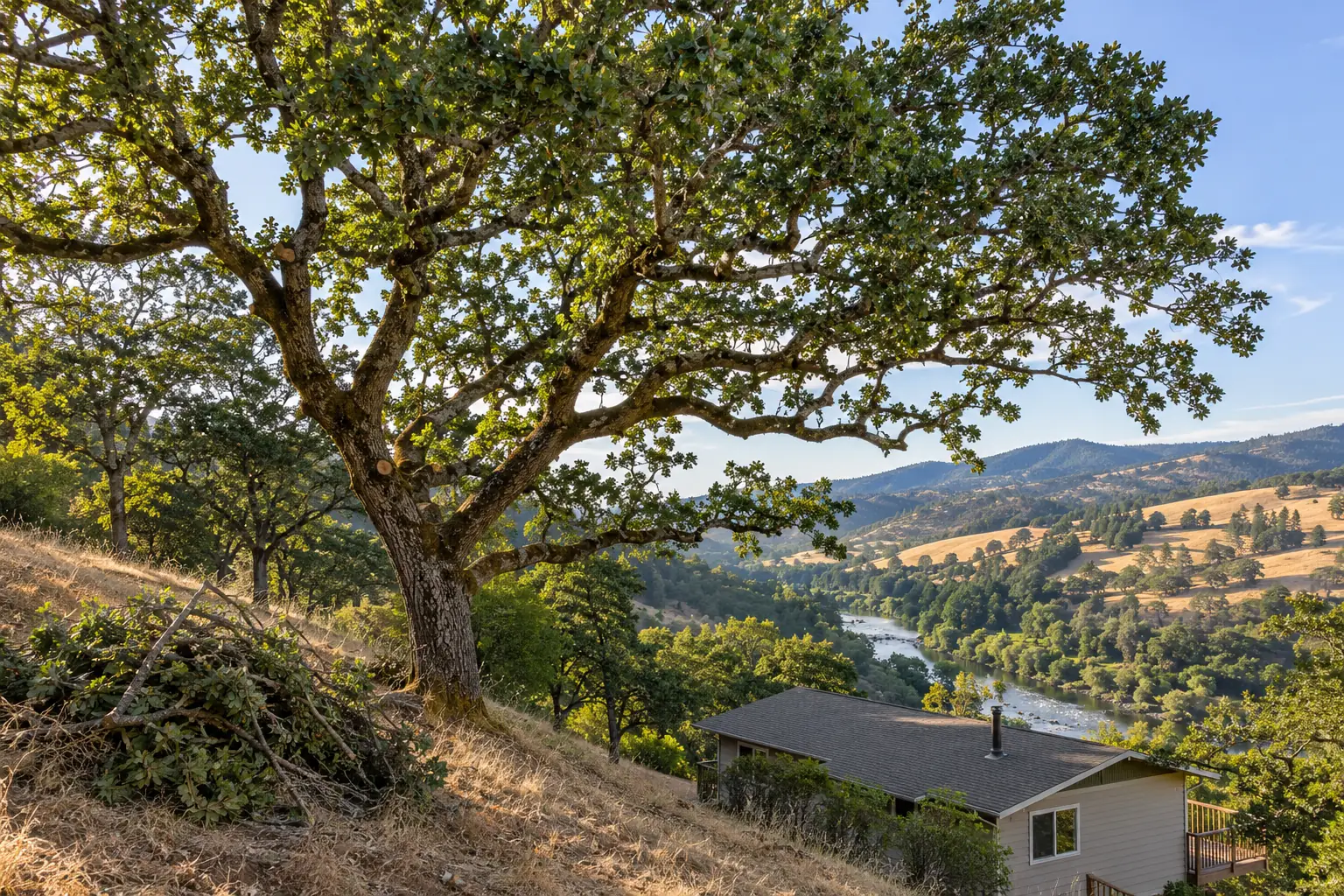
Tree trimming in Gold Hill means cutting selected branches off a living tree to clear a roof, a street or a wire, or to make the tree sounder. To get a tree pruned, call (541) 855-3080 for a free tree service referral to an independent tree company that holds an Oregon CCB license, one firm only. Get the tree seen in person first, then the quote on paper.
Tree Removal Gold Hill only passes your call along. Nobody answering that number climbs, cuts or prices trees, and you can turn down any quote you get. This page sets out the plain difference between trimming, pruning and crown reduction, why topping does lasting harm, which months suit oaks, pines, firs and fruit trees, and the city, Jacksonville and utility rules that touch branch work. For how this free referral service works, start at the home page.
Trimming, pruning and crown reduction compared
The three terms overlap, but each one means a different amount of cutting for a different goal. "Trimming" is the everyday word people use on the phone. "Pruning" is the word arborists use, and the International Society of Arboriculture's homeowner site says every branch should come off for a reason, because each cut changes how the tree grows.
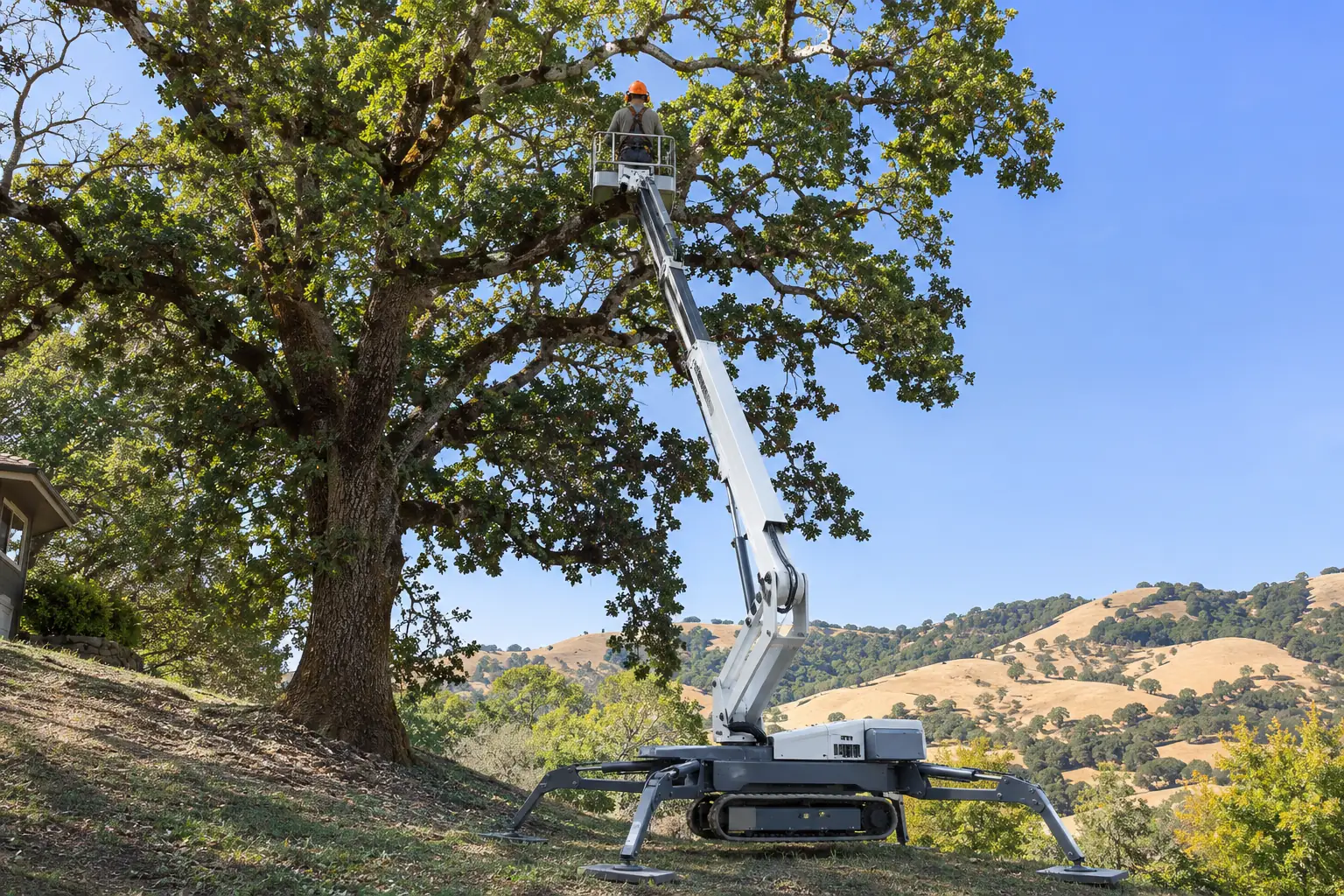
The ISA page groups pruning into four kinds of work:
| Type of pruning | What comes off | Usual reason |
|---|---|---|
| Cleaning | Dead, dying, diseased, weakly attached and low-vigor branches | Safety and tree health |
| Thinning | Some foliage at the outer edge of the crown | Let light and wind pass through |
| Raising | Lower limbs | Room for a roof, a truck, a walkway |
| Reduction | Branch ends, cut back to a side branch | Smaller height or spread, often for line clearance |
Crown reduction is the careful way to make a tree smaller. Per the ISA, a leader or branch end is cut back to a side branch big enough to take over, generally at least one third the diameter of the stem being cut. That keeps its shape and strength, the point of good tree care.
Why topping hurts trees
Topping means cutting branches back to stubs, or to side branches too small to take over as new tips. The ISA's consumer brochure, Why Topping Hurts Trees, calls it perhaps the most harmful pruning practice known.
The brochure gives these reasons:
- Starvation. Topping can take off 50 to 100 percent of the leaf-bearing crown, where the tree makes its food.
- Decay. Stub cuts are wounds the tree may never close, so rot moves in.
- Sunburn. Bark that was shaded suddenly bakes, which can split it.
- More risk later. Dozens of new shoots sprout below each cut. They are anchored only in the outer wood, can grow up to 20 feet in a single year in some species, and break easily in wind or ice.
- Higher cost. Corrective pruning usually follows within a few years.
OSU Extension gave a local answer to the same question in October 2025, when a homeowner asked about topping tall oaks next to a house. The urban forester wrote that topping is very rarely appropriate and greatly shortens the life of healthy trees, especially white oaks, and pointed to crown pruning to cut weight or removing only the riskiest tree instead. The hazard tree removal page covers how that call gets made.
When to prune trees around Gold Hill
Small cuts to remove dead, broken or diseased wood can happen almost any month, according to the ISA pruning page. Growth and wound closure go best when pruning comes before the spring flush of new leaves, and heavy cutting of live wood right after that flush should be avoided. Local trees add their own timing on top of that general rule.
| Tree | Better timing | Why | Source |
|---|---|---|---|
| Oregon white oak with mistletoe | Winter, while the oak is bare | Mistletoe clumps are easiest to see with no leaves | OSU news, Dec. 15, 2025 |
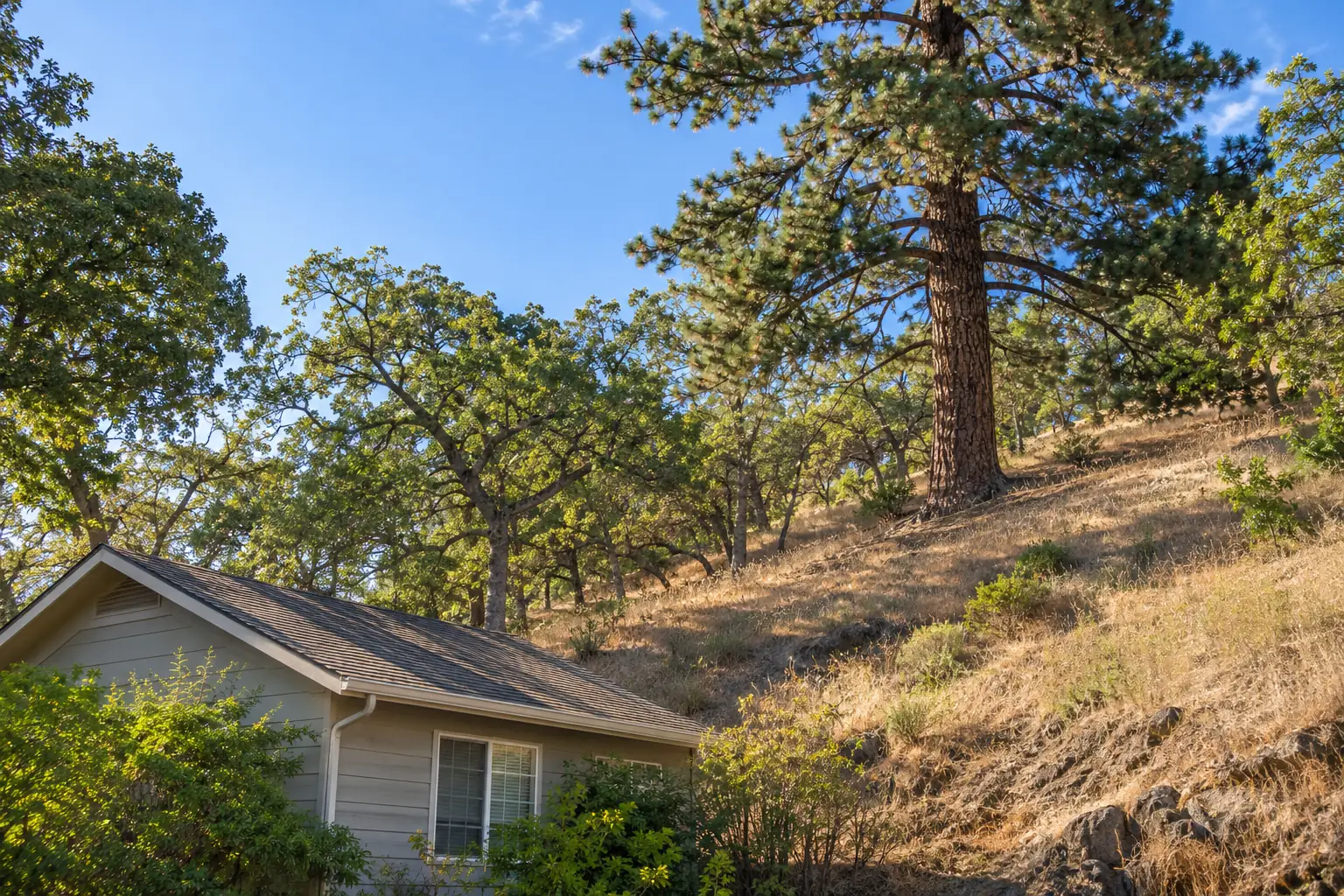
| Ponderosa pine | October through December | Fresh pine slash breeds Ips bark beetles; fall slash dries before beetles fly in April | ODF Forest Health Fact Sheet, April 2021 |
| Douglas-fir | Before spring growth; clear big wood by April | Douglas-fir beetle goes for downed material over 10 inches | Same ODF fact sheet |
| Apple, pear, plum and other fruit trees | Late winter to early spring, while dormant | Unpruned trees face more pest and disease trouble and bear less | OSU Extension, Feb. 2024 |
Oaks and mistletoe. The Pacific Northwest plant disease handbook says to cut out the infected oak branches, since snapping off only the green mistletoe shoots lets them sprout again. OSU's publication EM 9679 adds that pruning buys a few years and will need repeating, and that the mistletoe's effect on the oak is usually small.
Pines. ODF's fact sheet says pine slash from 3 to 8 inches thick that is cut between January and September should be chipped, burned or buried before beetles fly in April, or within two months of cutting. Chipping it below 3 inches makes the wood useless to most bark beetles.
Fire season. Saw hours shrink as fire danger rises; in 2026 the season took effect May 15 under ODF's regulated closure proclamation. The fire season tree work guide has the hour limits.
Gold Hill rules on branches over streets and corners
Inside city limits, Gold Hill's code makes the property owner keep branches high enough over public ways. Section 8.08.100 of Title 8 sets the heights: no growth lower than eight feet over a sidewalk, or lower than thirteen feet six inches over a roadway. The owner or occupant next to a parking strip answers for the trees and shrubs on that strip too.
Corner lots have one more rule. Section 17.56.050 of the city's zoning code, Title 17, keeps a clear vision area at street corners where nothing may stand taller than three and a half feet, except a tree whose branches and foliage are removed up to eight feet above grade. Under Section 17.56.060, that triangle runs 25 feet along each lot line in residential districts, or 10 feet where an alley meets the street.
Along the Rogue River, Section 17.49.040 of the same title keeps vegetation and tree cover within 75 feet of the top of the bank, with narrow exceptions. The chapter does not spell out how much pruning is fine there, so ask the city before heavy cutting in that band. The number for City Hall is (541) 855-1525, and the Gold Hill tree rules guide lists the other sections.
Pruning a resource tree in Jacksonville
Jacksonville's development code reaches pruning when the cut is heavy enough to count as removal. Section 18.18.020 of the city's Development Code, Titles 15 to 18, covers live "resource trees," meaning trees at least 12 inches across measured 4 feet above the ground. The section says its rules also apply to topping a resource tree.
The code's definitions matter here:
- Tree removal includes cutting down a tree, taking off 25 percent or more of its crown, trunk or roots, or damaging it so it declines. Topping counts as removal. Normal trimming or pruning does not.
- Topping means severely cutting limbs back to stubs three inches or larger inside the crown, so the natural canopy is gone.
The permit path depends on the zone, from a full Planning Department application in the Historic Core to an administrative permit in most residential zones. If a pruning plan would take a quarter of a big tree's crown, talk to Jacksonville planning before work starts. The Jacksonville tree removal page covers the rest.
Branches near power lines
Branches growing into overhead wires are Pacific Power's job. Pacific Power's tree page warns people never to prune or remove trees near power lines, because touching a line by accident can kill. Its crews prune around neighborhood lines for clearance at no charge, and it will send an arborist to look at a tree if you call its customer service line, 1-888-221-7070. That number is for routine requests like this one.
If the tree you want pruned sits near the service line that feeds your house, Pacific Power says it can arrange a free temporary disconnect so the work can be done safely. A limb already resting on the wires, or a wire that has fallen, is an emergency and no longer a pruning job. Get 35 feet or farther away, phone 911, and after that phone Pacific Power on 1-877-508-5088, its number for fallen wires and outages. The emergency tree removal page picks up from there.
What drives the price of tree trimming
Trimming is priced per tree, mostly by height, access and what sits underneath. LawnStarter's tree trimming cost guide, updated September 24, 2026, puts the average at $430 to $640 per tree, with these ranges by height:
| Tree height | Typical price per tree |
|---|---|
| Under 30 feet | $85 to $415 |
| 30 to 60 feet | $215 to $790 |
| Over 60 feet | $475 to $1,835 |
The guide names species, access, nearby wires or buildings, tree count and tree health as the main price factors. Around Gold Hill, a tall pine on a steep bank may need a climber because no bucket truck can reach it, and the cleanup method changes the bill. Ask whether chips stay on site or get hauled, and see the brush and debris removal page for the choices. These are national figures. The written estimate from the company is the price that counts, and the tree removal cost guide covers prices for taking a tree out instead.
Questions to ask before anyone climbs
A short list of questions sorts careful tree care from rough hacking. Ask these when the company comes out to look:
- Which branches will come off, and what is the reason for each one?
- Do you prune to ANSI A300, the tree care trade's written pruning standard? Have the company say what that forbids on your tree: stubs left behind, cuts flush to the trunk, topping, limbs stripped bare along their length, and spiked boots on any tree being kept.
- How much live foliage will come off, as a share of the crown? Leaves are where the tree makes its food, as the ISA brochure above points out, and in Jacksonville taking a quarter of a big tree's crown already counts as removal.
- Will you chip the brush here, haul it, or leave it piled?
- Is the price written down, with each tree listed?
- What is your CCB number? You can look it up on the Oregon CCB license search.
For a bigger job, such as opening up a whole slope or clearing a building site, see lot and land clearing.
Frequently asked questions
Is tree trimming the same as pruning?
People use the words the same way, but arborists say pruning, and they mean removing chosen branches for a stated reason. Cleaning, thinning, raising and reduction are all kinds of pruning. Topping is not one of them.
When should I prune an oak with mistletoe?
Winter is the easiest time to spot mistletoe, since the oak has no leaves. Cut out the infected branches rather than only the green shoots, which grow back. Expect to repeat the work every few years.
Do I need a permit to prune a tree in Gold Hill?
The city code sections reviewed for this page set branch clearance heights over sidewalks, roads and corners rather than a pruning permit. Ask the city before heavy pruning within 75 feet of the top of the Rogue River bank. In Jacksonville, removing a quarter of a resource tree's crown counts as removal.
Who trims branches that have grown into the power line to my house?
When the branches have only grown close and nothing is broken, sagging or sparking, call Pacific Power customer service at 1-888-221-7070. It prunes around its lines and can set up a free temporary disconnect of your service line so a tree company can work safely nearby. Once a limb snaps and lands on that wire, or the wire itself drops, it stops being a pruning matter: get 35 feet or farther away, phone 911, and after that phone 1-877-508-5088.