
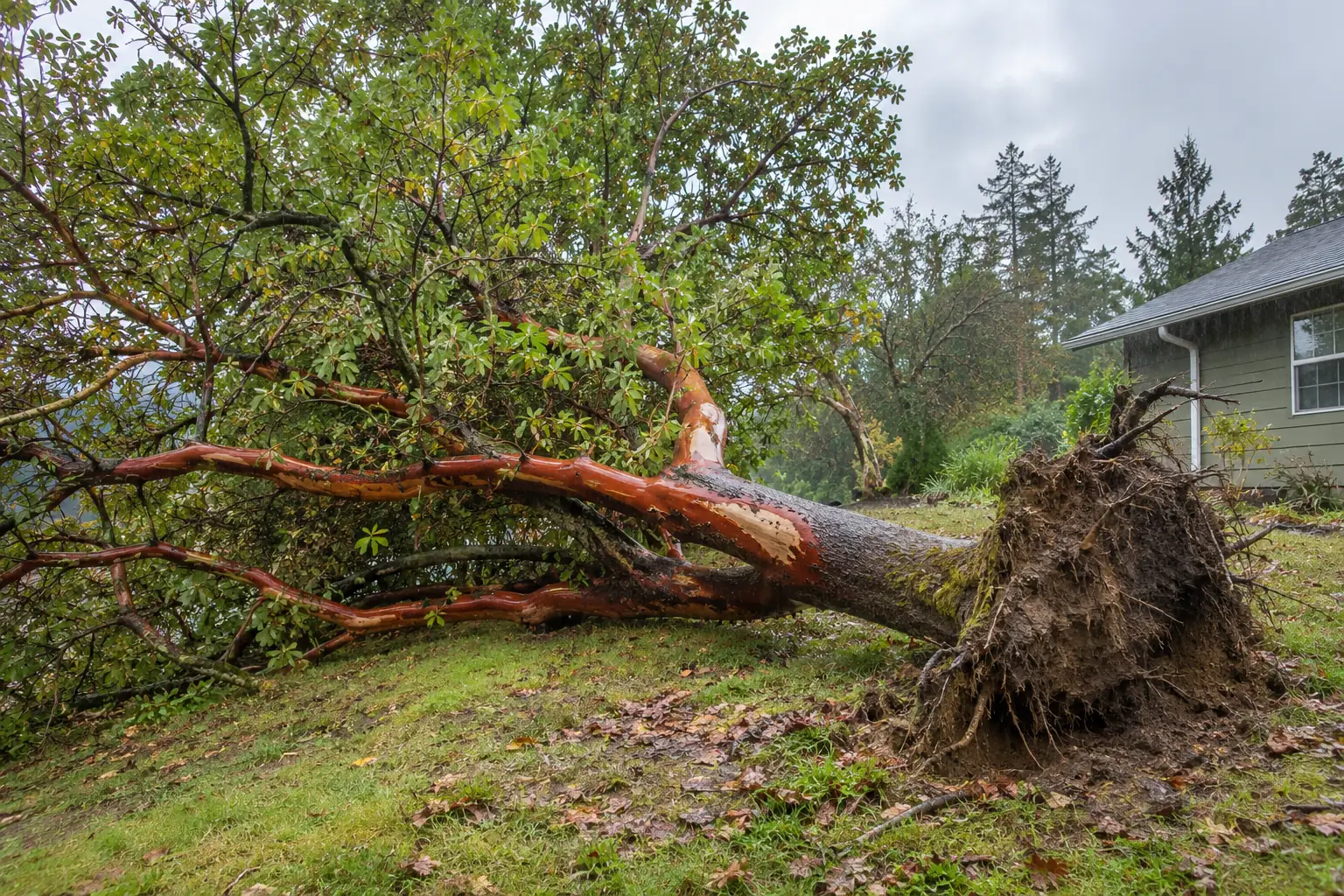
After wind, wet snow or ice breaks trees around Gold Hill, call (541) 855-3080 to reach one tree service, a separate business carrying an Oregon CCB license. Put three jobs to that company: taking down split trunks and hanging limbs, clearing what blocks your driveway, and a written estimate for the rest of the storm cleanup.
Tree Removal Gold Hill is a free referral service. It hands requests on and does none of the tree work itself. The company you are connected with decides how to handle the job and quotes it, and you choose whether to hire it. This page is about the days after a storm: sorting what is urgent from what can wait, dealing with broken trees on steep or riverside lots, and handling the wood and brush without breaking local burning rules. Start at the home page for how the service works.
Sort the damage before you call
The quickest way to plan storm cleanup is to split the damage into three groups: things that are on or over something, things that block access, and things that are just on the ground. That tells you, and the company, what has to happen first.
| What you see | How urgent | Where to read more |
|---|---|---|
| Trunk or heavy limb resting on the home, shop, vehicle or fence | Urgent | Emergency tree removal |
| Tree lying across the only drive up the hill, or the road | Urgent | Emergency tree removal |
| Tree in contact with an electric line | Get 35 feet away, 911, then Pacific Power | This page, below |
| Split or tipped tree aimed downhill at a home | Urgent | Hazard tree removal |
| Snapped branch caught above the roof, the yard or where kids play | Urgent | Hazard tree removal |
| Branches and brush lying loose on open lawn | Can wait | This page, cleanup section |
| Tree down in a pasture or woods, away from buildings | Can wait | Large tree removal |
Tell the company which of these you have when you call. After a big storm, companies are often sorting dozens of calls the same way, so a clear description helps you get placed correctly.
The storms that break trees in this part of Oregon
Trees around Gold Hill usually come down in winter wind and in heavy, wet snow that sits on branches. The National Weather Service in Medford issues watches and warnings for Jackson County at weather.gov/mfr, and it is worth checking before a front arrives.
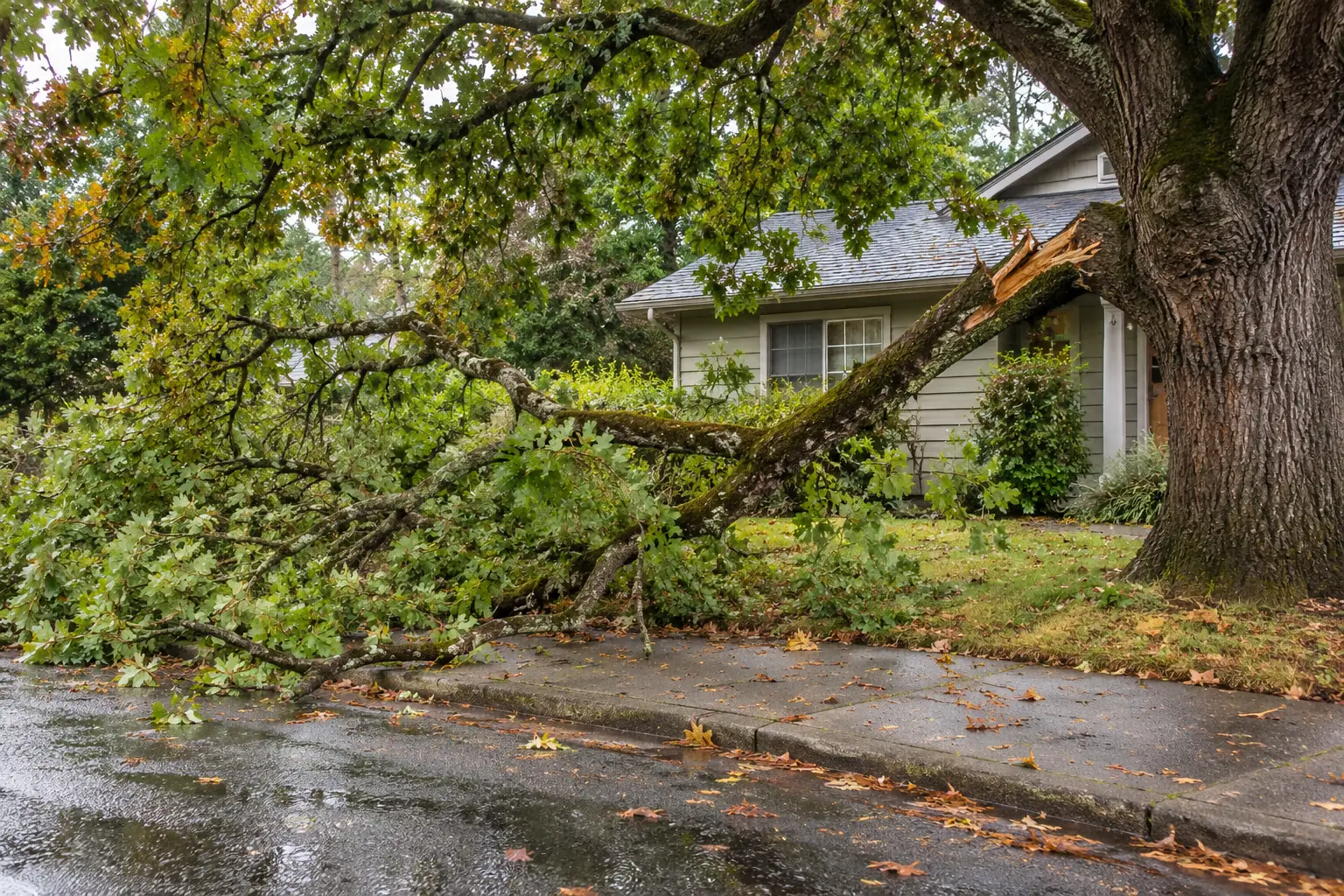
The NWS Medford February 2019 climate summary is a good picture of how snow does damage here. It describes heavy, wet snow that brought down thousands of trees in the Umpqua Basin, with power outages lasting days and in some cases weeks. It also reported 4.1 inches of snow at the Medford airport late that month. The weight of snow like that bends long limbs past the point they can recover.
Summer brings a different problem. Long dry spells stress trees, and a tree that is already weak can fail in the first strong wind of fall.
Broken trees and power lines
If a storm-damaged tree is touching a power line, the line comes first and the utility handles it. Pacific Power's outage page says never to go near a downed line. Get 35 feet or farther away and phone 911. After that, report it on 1-877-508-5088, the utility's number for fallen wires and outages.
A tree company works only after the utility makes the line safe. Pacific Power's tree page says its crews and contractors clear trees near distribution lines, and it offers a free temporary service disconnect so work near the line into a house can be done safely. Once the line is safe, the company you reach through (541) 855-3080 can take the rest of the tree down and clean up.
How storm-damaged trees are handled on the ground
Storm wood is harder to cut than standing wood because it is often bent, twisted or pinned. A trunk lying across another trunk, or a limb bent into a bow, stores energy. Cut it in the wrong place and it can whip.
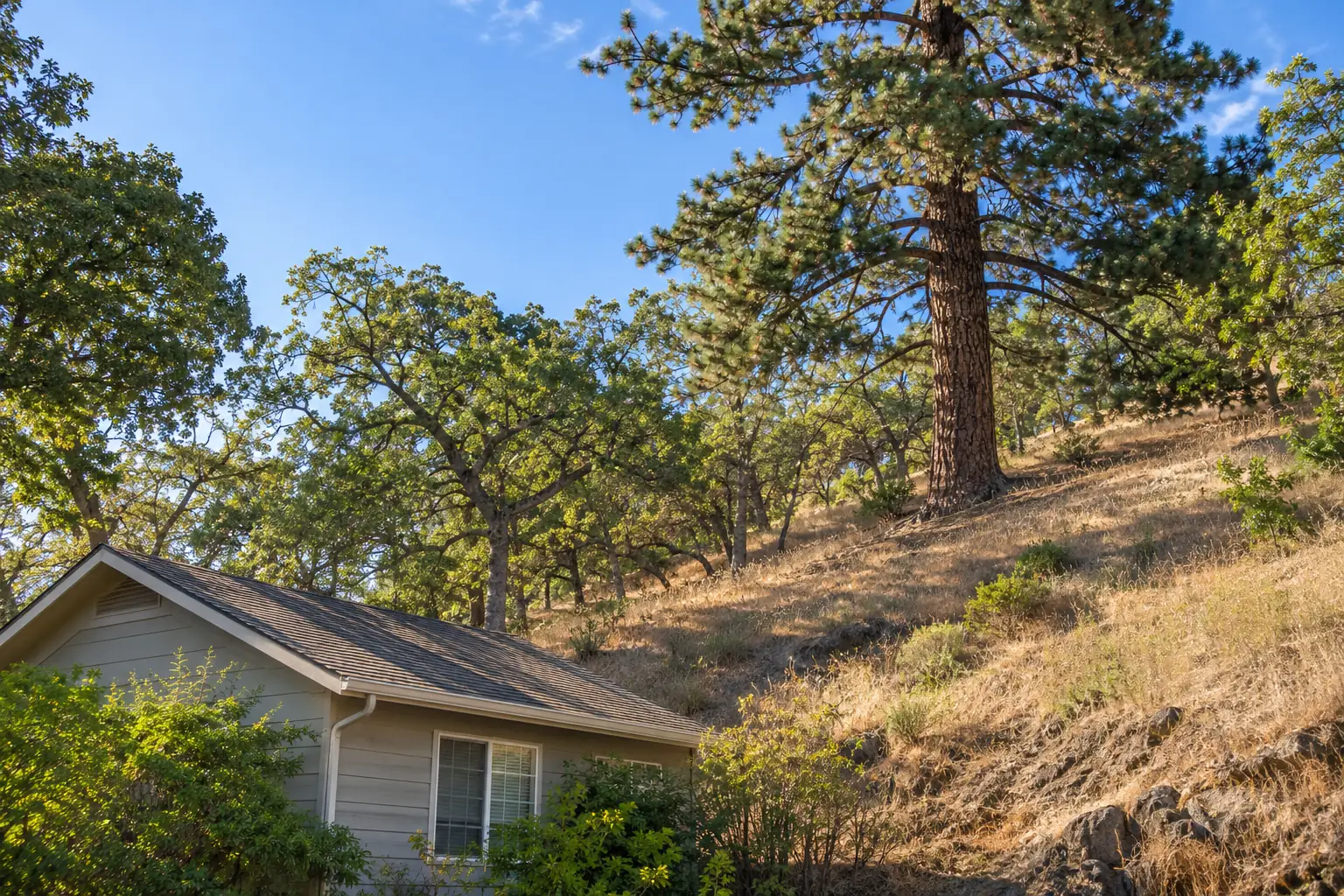
That is the main reason to leave storm work to a licensed company. Expect it to:
- Look at how each piece is loaded before cutting anything.
- Release tension with small relief cuts on the side that will open.
- Work from the outer branches toward the trunk.
- Leave the root plate of an uprooted tree until the trunk is off it, since the plate can tip back into its hole.
On hillside lots, broken trees can slide once they are cut free, and logs may need to be pinned or roped in place. The hillside tree removal guide explains how slope changes the job.
Near the Rogue River, Gold Hill code keeps vegetation and tree cover within 75 feet of the top of the bank, with limited exceptions (Title 17, Chapter 17.49). A trunk on your deck still needs to be removed. Clearing standing growth near the bank as part of the cleanup is a question for the city, which you can reach at (541) 855-1525. More is in the Gold Hill tree rules guide.
Storm cleanup: wood, brush and burning
The wood and brush from a storm can be chipped, hauled, left in rounds, or in some seasons burned, and each choice has rules. Ask the company what its price includes before work starts.
Burning. Jackson County's open and barrel burning page says no open or barrel burning is allowed in the county during fire season. It also bans burning from November 1 through the end of February inside the Air Quality Maintenance Area. The county's daily burn advisory line is 541-776-7007, and a permit comes from your fire protection agency. Inside city limits, Gold Hill code also bars bonfires and rubbish fires during state forestry fire season (Section 8.12.030 of Title 8).
Dumping. Do not pile storm debris on city land. Gold Hill code Section 8.18.010 bans dumping or storing yard debris on property owned by the city.
Chipping and hauling. Many companies chip brush on site and either haul the chips or leave them for mulch. Logs can be hauled or cut to firewood length and left for you. Oak makes heavy, dense wood, and the Oregon Department of Forestry notes Oregon white oak is often used for firewood.
Hiring after a storm
After a big storm, check the license of anyone who offers to cut trees, including people who knock on the door. Oregon requires a CCB or LCB license for tree removal and stump grinding, per the Landscape Contractors Board. Look up any number on the Oregon CCB license search.
A few habits help:
- Get the price in writing, with what is included.
- Ask about insurance and ask to see proof.
- Do not pay the whole amount before work starts.
- Keep copies of everything for your insurer.
For the company reached through (541) 855-3080, a CCB search was run once, ahead of the first referral. Run its number yourself all the same, and have it show you an insurance certificate.
Insurance and storm damage
Homeowner policies often help with trees that fall on a covered structure, but coverage differs by policy, so confirm with your insurer before you assume anything. Trees that fall in the yard without hitting a building may be treated differently. Take photos before any cleanup, keep the written estimate and invoice, and report the claim promptly.
Costs vary with how tangled the damage is. The tree removal cost guide lists published price ranges with dates, but the company's written estimate is the number that counts for your job.
Timing storm cleanup around fire season
Storm cleanup that runs into late spring can bump into fire season rules. In 2026, ODF's regulated closure proclamation for the Southwest Oregon District took effect May 15. Under it, saw hours shrink as fire danger rises and saws are banned at extreme danger. Winter and early spring are usually the easier window for non-urgent storm cleanup. The fire season tree work guide has the details.
Frequently asked questions
What should I do first after a storm knocks down trees?
Check that nobody is hurt and that no lines are in the branches. If a line is caught up in them, get 35 feet or farther away, phone 911, and after that phone Pacific Power on 1-877-508-5088. Then sort the damage: anything resting on a building, sealing off your drive or dangling above a spot where people gather goes first. Call (541) 855-3080 to reach a licensed tree company.
Can I burn the storm debris in Gold Hill?
Not during fire season. Jackson County bans open and barrel burning in fire season and in winter inside the Air Quality Maintenance Area. Outside those times, call the burn line at 541-776-7007 and get a permit.
Is a tree that fell in my yard but hit nothing an emergency?
It is not. Branches lying in open yard, touching nothing and in nobody's way, can wait for a regular visit. It is still worth having it cleared before the next storm.
Does homeowner insurance pay for storm tree removal?
It depends on your policy and what the tree hit. Many policies help when a tree lands on a covered structure. Ask your insurer, and keep photos and the written estimate.
How do I know a storm cleanup crew is licensed?
Ask for its CCB number and look it up on the Oregon CCB license search. Tree removal in Oregon needs a CCB or LCB license.