
If you have a tree to remove in Foots Creek, call (541) 855-3080 to be connected with one separate tree business carrying an Oregon CCB license. First find out if it covers the stretch of Highway 99 between Gold Hill and Rogue River. A visit should take in the tree, the slope and the access before any price is named, and that price can be requested as a written estimate. Nothing is booked until you agree to it.
About Foots Creek
Foots Creek is an unincorporated community and a census-designated place in Jackson County. Its Wikipedia entry places it along Oregon Route 99 near the spot where Foots Creek empties into the Rogue River, with Interstate 5 and Valley of the Rogue State Park across the river. The 2020 Census counted 734 people in the Foots Creek CDP, which covers a little over six square miles.
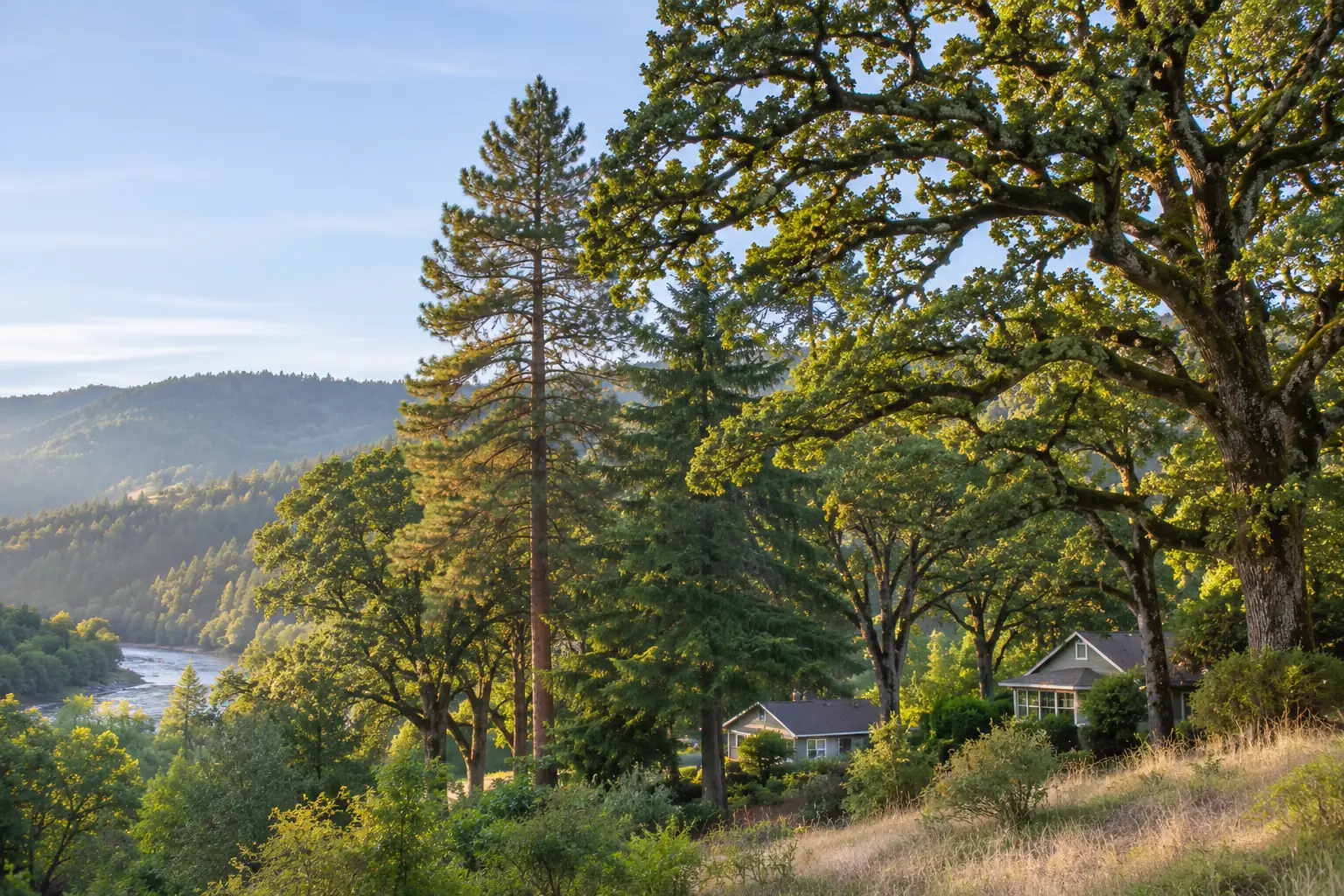
On a map, the census area lies southwest of Gold Hill, between Gold Hill and the city of Rogue River, and its center point is roughly 5.6 miles from Gold Hill in a straight line. The same entry says locals have long called the place Bolt, and that the creek carries the name of O. G. Foot, a miner who prospected along it in the 1800s.
Gold mining shaped this ground
Foots Creek was a gold mining district before it was a neighborhood. The Oregon Metal Mines Handbook, scanned in a DOGAMI archive file, names Foots Creek as one of the old mining districts of the Gold Hill area and describes its valley as a tributary on the south side of the Rogue. It records a bucket-line dredge built on the right fork of Foots Creek in 1903, and later dredges working the left fork, until the wartime gold mine closing order stopped dredging in October 1942.
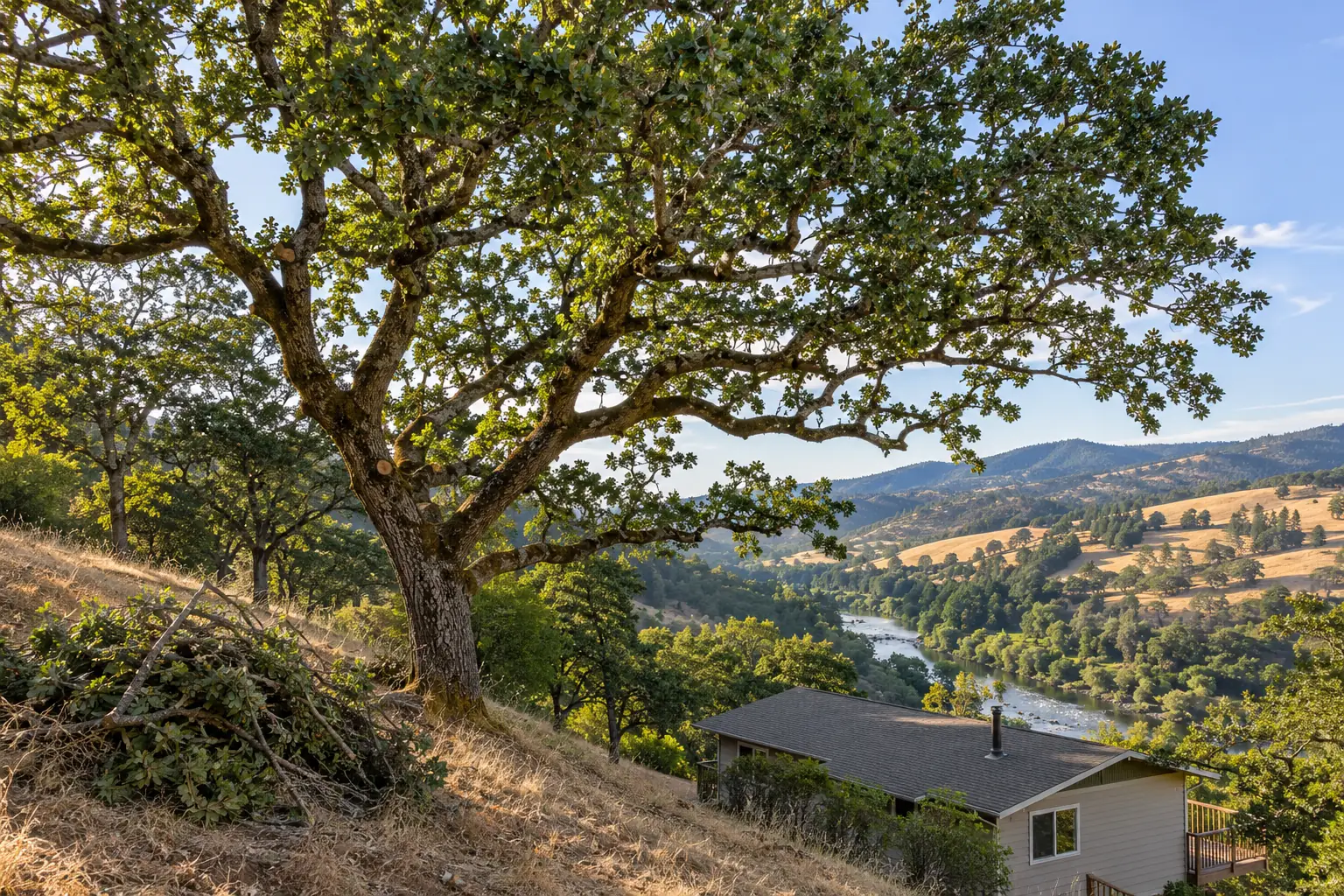
The handbook also says the mountain slopes in this part of Jackson County are quite steep, with a heavy cover of brush. Houses tucked up a side draw or on a bench above the creek can have a tree on ground too steep for a bucket truck. In those spots a company may climb the tree and lower it in pieces, or set rigging from another anchor point. The guide to hillside tree removal walks through slope, erosion and how rigging works on a grade.
Creek and river rules for tree cutting in Foots Creek
Because Foots Creek is outside any city, Jackson County's Land Development Ordinance governs tree cutting near water. Chapter 8, Section 8.6.4, asks that trees and other vegetation stay in place within 75 feet of the top of the bank of the Rogue River. For Class 1 or 2 streams and other fish-bearing waters, the distance is 50 feet.
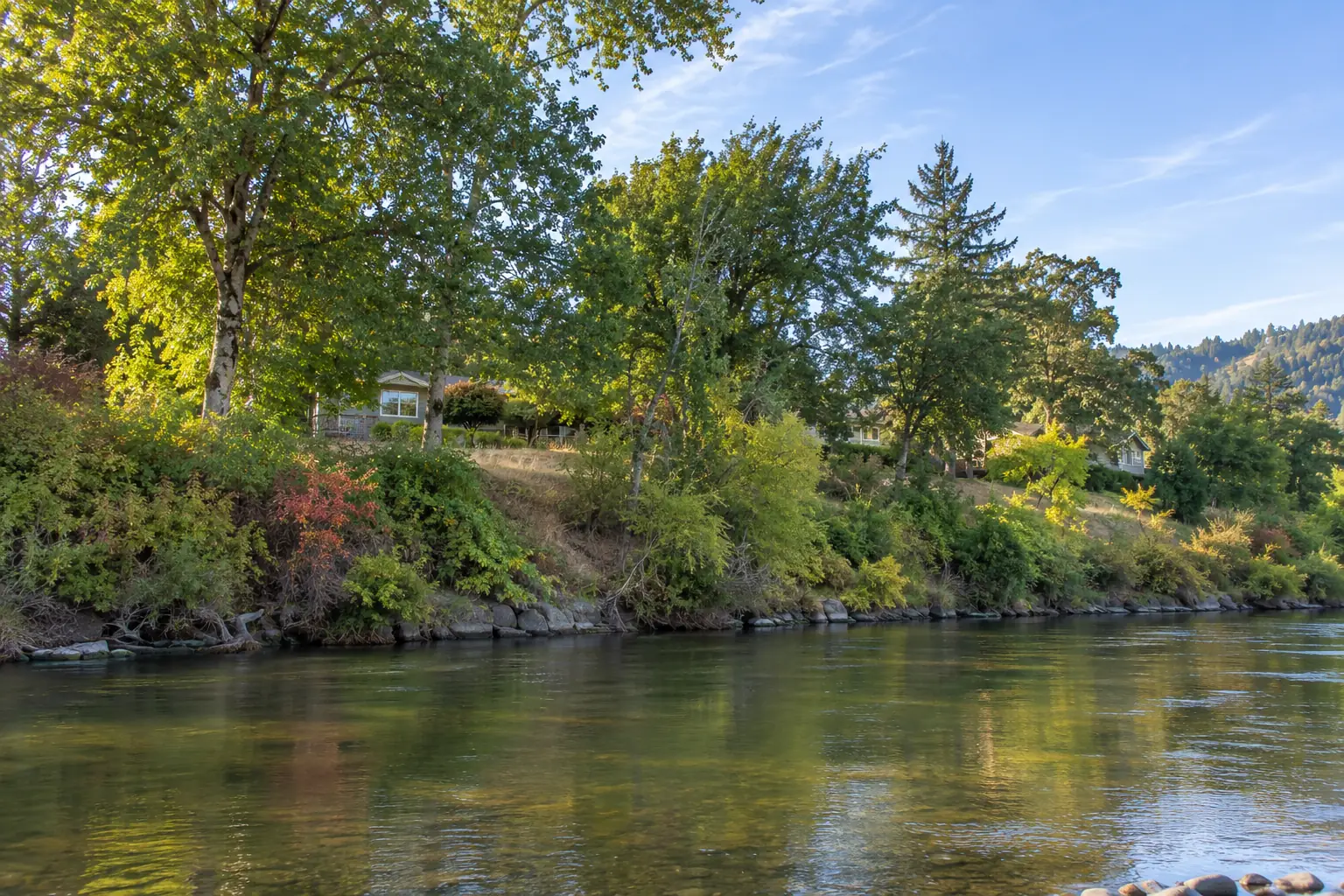
The ordinance allows a few exceptions. Non-native vegetation can come out if native plants go back in under a plan approved by the Oregon Department of Fish and Wildlife. Forestry work permitted under the Forest Practices Act is also excepted.
What this means on the ground:
- Measure from the top of the bank, not from the water's edge in late summer.
- If the tree is inside 75 feet of the Rogue, or near Foots Creek or one of its forks, call Jackson County Development Services before any cutting.
- Ask the tree company to note the distance to the bank on its estimate, so you have it on paper when you talk with the county.
Whether a given reach of Foots Creek counts as fish-bearing is a question for the county. Get the answer from them directly.
Septic systems and heavy equipment
A tree job can harm a septic system if trucks or log loaders cross the drain field. The Oregon Department of Environmental Quality permits residential septic systems in Jackson County from its Medford office, and an OSU Extension fact sheet, Why Do Septic Systems Fail?, warns that driving, parking or building on top of the soil absorption area can damage it. The same sheet notes that tree roots can clog an absorption field.
Before the company arrives, find the tank lid and the rough run of the drain lines. Flag them with stakes or paint so the workers can route equipment and drop wood away from them. If roots from the tree you are removing have already reached the lines, mention it, since a stump left in place keeps those roots there until they rot.
Storms along the river
When a storm drops a limb or a whole tree in Foots Creek, the first question is whether it counts as an emergency. A trunk or heavy limb resting on a home, shop, car or fence qualifies, and so does a tree lying across the creekside lane that is your only way out. A snapped branch caught above the roof or the yard qualifies as well. The page on storm damage tree removal covers what to do first after a storm and when to call.
If a tree has come down into an electric line or is leaning on one, stay well back, call 911 and then Pacific Power at 1-877-508-5088. Pacific Power says to stay at least 35 feet from a downed line and to treat it as energized. A tree company can start only after the utility has made the line safe.
How a referral from this service works
This service is a referral service, not a tree company, and it never sends anyone out itself. When you call (541) 855-3080, your details go to an independent company holding an active Oregon CCB license, one business only. Whether it visits, what it quotes and which work goes ahead are settled between the two of you. Ask for the company's CCB number and confirm it on the CCB's search page.
Prices depend on the tree, the slope and how far equipment has to travel. For typical ranges and what pushes a quote up or down, see the tree removal cost guide for Gold Hill, and remember that the company's own estimate is what you would pay.
Across the river and up Highway 234, see tree removal in Sams Valley. Farther south, the Applegate page covers the Applegate River country. Start from the home page for everything else.
Frequently asked questions
Is Foots Creek a real town or part of Gold Hill?
It is its own unincorporated community and census-designated place, with 734 residents in the 2020 Census. It is not inside Gold Hill's city limits, so Jackson County rules apply rather than the City of Gold Hill's code.
Can I cut a cottonwood on my Rogue River frontage in Foots Creek?
Check with Jackson County first. The county's ordinance asks that trees and other vegetation within 75 feet of the top of the Rogue's bank stay in place, with exceptions such as replacing non-native plants with natives under a fish and wildlife plan. A company can measure the distance for you, but the county decides.
My lot is steep. Can a tree still be removed?
Usually, yes. On steep ground a company may climb the tree and lower sections on ropes, or anchor rigging to another tree. Expect the price to reflect the extra time, and ask how the company plans to keep cut wood from rolling downhill.
Will tree work hurt my septic drain field?
It can if heavy equipment drives across it. OSU Extension warns that driving or parking on the absorption area can damage it. Mark the tank and the drain lines before the company arrives, and ask the company to keep trucks and log piles off that ground.