
Gold Hill's city code does not, in the titles reviewed here, require a general permit to remove a tree on a private lot. It does keep trees and other vegetation within 75 feet of the Rogue River bank, and it bans hazardous dead trees. Confirm with City Hall at (541) 855-1525, then call (541) 855-3080 to reach a licensed tree company.
Tree Removal Gold Hill is a referral service, not a tree company, a law office or a government agency. Nothing here is legal advice, and rules change. The city, Jackson County and state agencies decide how their rules apply to your property. This guide points to the actual code sections so you can read them yourself and ask the right office. For how the service works, see the home page.
Do you need a permit to remove a tree in Gold Hill?
In most cases, the answer from the code reviewed for this guide is no city tree permit for a private lot, with a major exception along the river. The City of Gold Hill posts its municipal code by title on its Charter and Municipal Code page. The titles checked for this guide were Title 8 (Health and Safety), Title 12 (Streets and Sidewalks) and Title 17 (Zoning and Land Use, 2026 version). None of them sets a general permit for cutting a tree on private land.
That is not the same as "no rules." Three parts of the code touch tree work directly, and they are covered below. Other titles, permits tied to construction, and historic property rules could also apply to a specific project. The safest step before cutting is a short call to City Hall at (541) 855-1525, which is listed on the city's website.
The 75-foot Rogue River setback
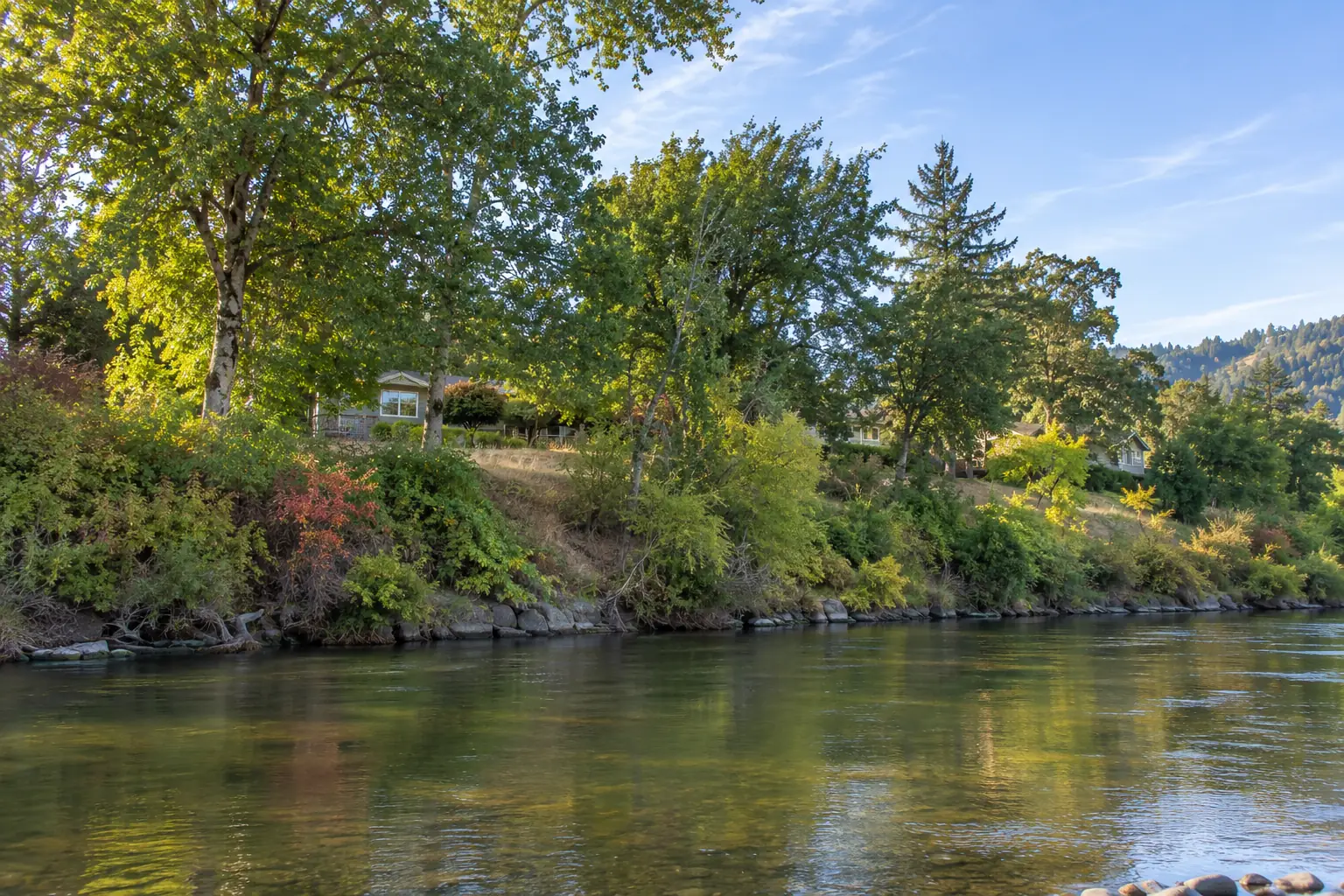
The rule most likely to affect tree work in Gold Hill is the riparian setback along the Rogue River. Chapter 17.49 of Title 17, Stream Corridors and Riparian Habitat, applies to lands next to the river. According to the code, Gold Hill has no named secondary streams.
Here is what the chapter says, in plain terms:
- Setback. Section 17.49.020 says no structure or other development, including grading, will be located closer than 75 feet to the top of bank of the Rogue River. Where the top of bank sits is set by the city, working with the Oregon Department of Fish and Wildlife.
- Vegetation and trees. Under Section 17.49.040, every plant and all tree cover in the first 75 feet back from the top of bank stays, apart from what the chapter permits.
- Exceptions. Plants that are not native can come out and be swapped for native trees and shrubs, following a landscape plan drawn up by a plant ecologist or similar landscape professional, or by the owner with ODFW looking it over. Clearing is also allowed for permitted water-related uses and for forestry carried out with Forest Practices Act approval.
- Limited clearing for allowed uses. Section 17.49.020(B) caps vegetation removal around allowed uses. For example, a driveway may clear no more than a 10-foot width.
- Reductions. Section 17.49.050 allows the setback to be reduced by up to 37.5 feet through a Type 2 review in limited cases.
The chapter does not list a separate hazard tree exception. If a tree inside the 75-foot band is dead, split or leaning toward a home, call the city before anyone cuts it and ask how it wants the job handled. The hazard tree removal page covers how to spot a hazard tree.
Dead trees and branch clearance over streets
Gold Hill's code requires property owners to keep growth clear of sidewalks and roads and not to let hazardous dead trees stand. Section 8.08.100 of Title 8 sets three rules:
- Over a sidewalk, brush, trees, limbs and other growth need eight feet of clearance. Over a roadway, they need thirteen feet six inches.
- If a dead or decaying tree endangers the public, or nearby people or property, the owner or whoever is in charge of the land must not leave it standing.
- The owner or occupant of property next to a parking strip is responsible for growth on that strip.
Title 8 treats violations as nuisances and lays out a notice and abatement process. If the city abates a nuisance, the cost can become a lien on the property. A snag that has stood for weeks may not call for urgent tree work, yet under this section it can still turn into a code problem.
Erosion control on slopes and near water
Tree work that is part of a permitted project on a slope or near water can trigger Gold Hill's erosion control rules. Section 17.50.020 of Title 17 requires an erosion prevention and sediment control plan before certain building or grading permits are approved. The triggers include:
- Disturbance of 2,500 square feet or more of land.
- Land or native vegetation disturbance within 50 horizontal feet of the top of bank of a wetland, stream, river or storm drain inlet.
- Disturbing at least 500 square feet where the slope is ten percent or steeper.
Section 17.50.050 adds clearing standards for those plans: no tree may serve as an equipment anchor, and none may be dropped beyond the marked work area. A single tree removal without a permit is a different situation, but on a steep lot it is worth asking the city. The hillside tree removal guide covers slope work in more detail.
Burning and dumping inside city limits
Gold Hill code limits burning and dumping of yard debris, which affects what happens to brush after a tree comes down. Section 8.12.030 of Title 8 bars bonfires and outdoor rubbish fires on streets, public ground or private property within the city during state forestry fire season. Section 8.18.010 bans dumping or storing yard debris on city-owned property.
Jackson County's rules apply on top of these. The county's open and barrel burning page says no open or barrel burning is allowed in the county during fire season. It also bans burning from November 1 through the end of February inside the Air Quality Maintenance Area. The daily burn advisory line is 541-776-7007. A burn permit comes from your fire protection agency.
Outside city limits: Jackson County rules
Land outside Gold Hill's city limits, including unincorporated areas such as Sams Valley and Foots Creek, falls under Jackson County's rules instead of the city's. The county applies its Land Development Ordinance through Jackson County Development Services. Its Development Services page lists Planning at 541-774-6907 and Code Enforcement at 541-774-6906.
The county's riparian rules work much like the city's. The Jackson Soil and Water Conservation District's guide to managing vegetation near water says the county uses a 75-foot setback on the Rogue River and 50 feet on streams, measured from the top of bank. The guide says trees and shrubs in the setback are kept in place by default and that removal needs county approval. It also says riparian vegetation may not be cleared to build wildfire fuelbreaks. The district gives guidance only, so confirm with county Planning.
Nearby communities have their own pages on this site: Sams Valley, Foots Creek, Central Point, Jacksonville and the Applegate. Central Point and Jacksonville are cities with their own codes.
State rules that can apply
Two state rules come up most often with tree work around Gold Hill.
Forest operations. If you plan to harvest timber, including selling logs, the Oregon Department of Forestry may need advance notice. ODF's notification page says notifications must be filed at least 15 days before an operation starts, through its FERNS system. Ask ODF whether your project counts.
Fire season rules. On and near ODF-protected land, saw use and other equipment follow the daily fire danger level under ODF's regulated closure proclamation. The fire season tree work guide explains it.
Contractor licensing. Oregon requires a license from the Construction Contractors Board or the Landscape Contractors Board for tree removal and stump grinding, per the LCB's tree work FAQ. Check any company on the Oregon CCB license search.
Who to call before you cut
The right office depends on where the tree is and what you plan to do. Use this table as a starting point.
| Situation | Who to ask | Contact |
|---|---|---|
| Tree inside Gold Hill city limits | City of Gold Hill | (541) 855-1525 |
| In-city tree up to 75 feet from the Rogue River | City of Gold Hill | (541) 855-1525 |
| Tree on rural land outside city limits | Jackson County Planning | 541-774-6907 |
| Tree touching a power line (get 35 feet or farther away) | 911 first, then Pacific Power | 911, then 1-877-508-5088 |
| Planting or digging near buried lines | Utility locate | 811 |
| Burning brush | Jackson County burn line | 541-776-7007 |
| Selling logs or harvesting timber | Oregon Department of Forestry | FERNS notification |
| Checking a contractor | Oregon CCB | License search |
Costs tied to these rules are covered in the tree removal cost guide.
Frequently asked questions
Do I need a permit to cut down a tree on my lot in Gold Hill?
The city code titles reviewed for this guide do not set a general tree permit for private lots. A retention rule covers trees up to 75 feet from the Rogue River bank. Call City Hall at (541) 855-1525 to confirm for your property.
How far from the Rogue River do the tree rules apply?
Under Gold Hill code, plants and tree cover in the 75 feet nearest the top of the Rogue River bank stay, save for a few exceptions. The city fixes the top-of-bank line together with the Oregon Department of Fish and Wildlife.
Can the city make me remove a dead tree?
The city treats a hazardous dead or decaying tree left standing as a nuisance, and the owner is expected to deal with it. Ask the city how it applies to your tree.
How low can my tree's branches hang over the street?
City code says growth over a sidewalk must clear eight feet and growth over a roadway must clear thirteen feet six inches. The owner next to a parking strip is responsible for growth there.
What rules apply if I live outside Gold Hill city limits?
Jackson County's rules apply, through the county's Land Development Ordinance. The county uses a 75-foot setback on the Rogue River and 50 feet on streams. Call Jackson County Planning at 541-774-6907.