An oak near Gold Hill should come down when it is dead, split, decayed at the base or leaning over a home, and often not when it is healthy and only shading something. Oaks are important habitat here. Call (541) 855-3080 to reach a CCB-licensed tree company. Have it see the oak in person and put the cost of the work on paper.
Tree Removal Gold Hill is a free referral service. It does no tree work and does not inspect trees. The company you are connected with does that, and you decide what happens to your tree. This guide covers the two oaks most people around Gold Hill have, Oregon white oak and California black oak. It explains why the state treats oak woodland as priority habitat, when removal is the right call, how mistletoe fits in, and why clearing conifers can be better for an oak than cutting it. The home page explains how the service works.
Why oaks matter in the Rogue Valley
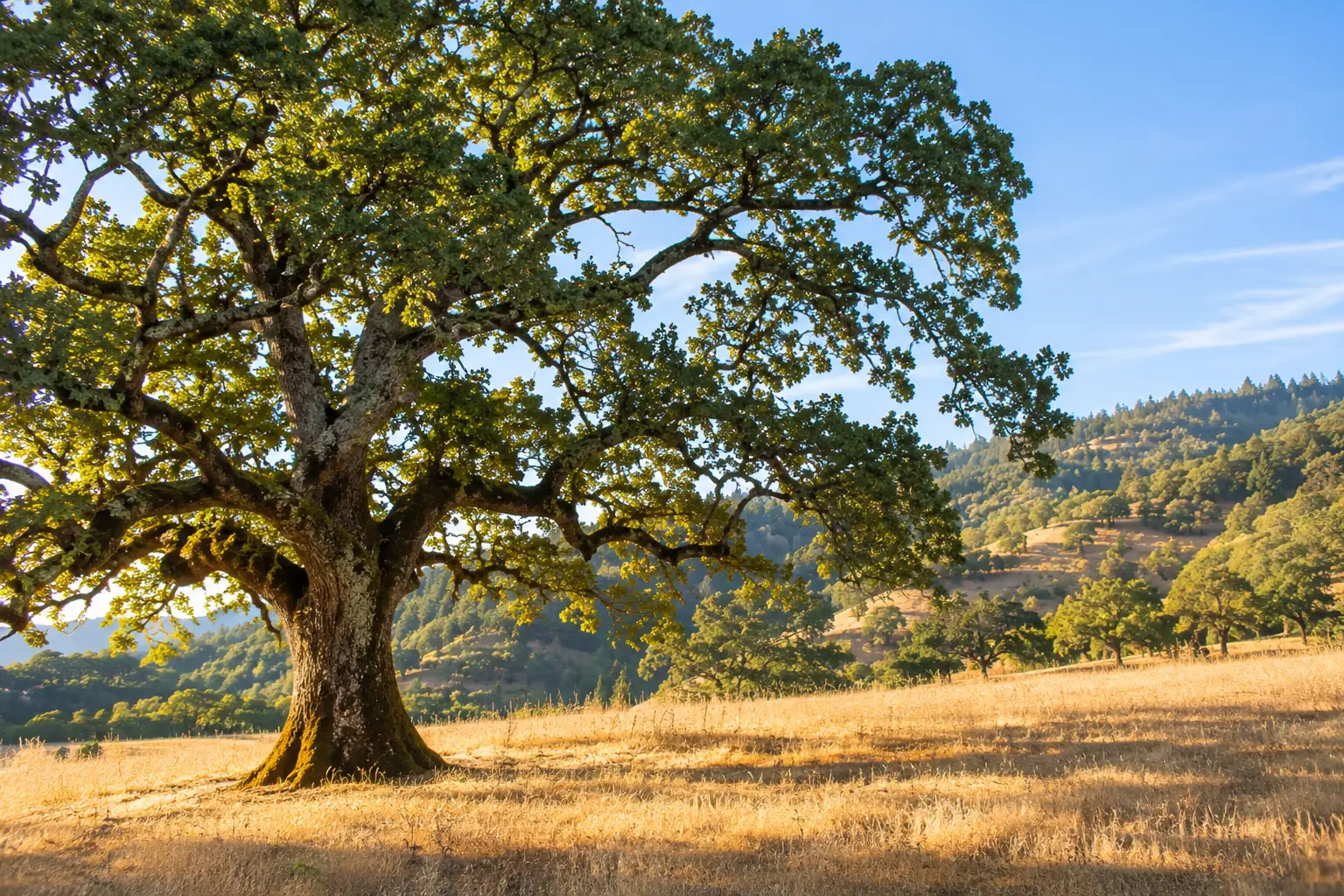
Oak woodland is one of the habitats Oregon has flagged for conservation, and the Rogue Valley sits squarely in it. The Oregon Conservation Strategy, the state's wildlife action plan, lists oak woodlands as a Strategy Habitat in the Klamath Mountains ecoregion, among others. That ecoregion covers much of southwest Oregon, including the Rogue River valley. The Strategy names Oregon white oak as the dominant species and black oak as another key part of these woodlands.
Many birds and animals depend on oaks. The Strategy names the Oak Titmouse and Acorn Woodpecker as birds tied to oak habitat. The Oregon Department of Forestry notes that bird diversity is often higher in oak forests than in nearby conifer forests. It adds that white oaks support the western gray squirrel, which it describes as sensitive in Oregon.
The Strategy lists the main threats to oak habitat: conversion to vineyards, homes and other uses; Douglas-fir crowding in after fire suppression; and the loss of large, open-grown oaks with wide limbs and cavities. Because most remaining oak habitat is privately owned, a homeowner's decision about one big oak is part of that picture.
When an oak should come down
An oak should come down when it is likely to fail onto something that matters, or when it is already dead. Common reasons include:
- Dead or dying. No leaves in summer, or bark falling away from large parts of the trunk.
- Structural failure. A crack through the main trunk, a split at a major fork, or a large limb partly torn away.
- Root or base decay. Fungus at the base, hollow sounds, or soil lifting on one side.
- A new lean toward a target. Especially after a storm, and especially on a slope.
- Construction damage. Roots cut by a foundation, trench or driveway close to the trunk.
If any of these describe an oak near your house, the hazard tree removal page explains what to look for and what to ask. If a limb or the whole tree is already on your roof, see emergency tree removal.
When an oak can stay
A healthy oak often needs less than removal. If the worry is shade, a single heavy limb over the roof, or leaves in the gutters, ask the company about pruning first. Options include removing one limb, reducing weight on a long limb, or clearing branches back from the roof.
A large, healthy oak is hard to replace. ODF describes Oregon white oak as a slow grower in both height and diameter. A young oak planted today will take decades to reach the size of the one you remove.
On rural acreage, a dead oak far from buildings and roads can sometimes be left standing as a snag. The Strategy recommends keeping existing snags for cavity-nesting wildlife. Near a house, a fence or a road, that is not a safe choice.
Mistletoe on oaks
Oak mistletoe grows on Oregon white oak and black oak, and it is usually a limb problem rather than a reason to remove the whole tree. The Pacific Northwest plant disease handbook, an Extension publication with OSU, lists white oak and black oak among its hosts. It says branches heavily laden with mistletoe often break off in storms or high winds, and that property damage may result.
OSU Extension's publication on mistletoe, EM 9679, says the effects of true mistletoes on host trees are typically small. Trees with many infections can show growth loss, branch dieback and drought stress. It notes the berries are a winter food source for birds. OSU does not normally recommend treatment. Pruning out infected branches can give a few years of relief, but it has to be repeated.
What this means for a homeowner:
- Look at where the mistletoe is. Clumps on limbs over the roof, driveway or play area matter most.
- Ask the company about cutting out the heavily loaded limbs. The handbook says cutting out affected branches works better than pulling off the green shoots, which regrow.
- Remove the whole oak only if the tree has other serious problems, or if so much of the crown is infected that pruning would leave little.
Oaks crowded by conifers
An oak shaded by fast-growing conifers is often in more danger than one with mistletoe. ODF says Oregon white oak will die after it is overtopped by Douglas-fir, and the Strategy lists Douglas-fir encroachment after fire suppression as a main threat to oak habitat.
The Strategy's recommended actions include removing conifers that compete with larger oaks. OSU Extension's EM 9436, written for northwest Oregon oak land, says oaks need ample space and should receive full sun on all sides. It lists Douglas-fir, grand fir, ponderosa pine, incense-cedar and bigleaf maple as faster-growing trees that can outcompete oak. On a rural lot with a big oak hemmed in by young firs, the tree to take down may be the fir, not the oak. Ask the company to look at it that way.
Oaks and wildfire
Large oaks with open space around them can be part of a fire-resistant landscape rather than a hazard to clear. EM 9436 says Oregon white oak resists fire partly through its corky bark. It also notes oak leaves and wood have fewer resins, and that open oak stands with little shrub cover are less prone to crown fire than dense conifer stands.
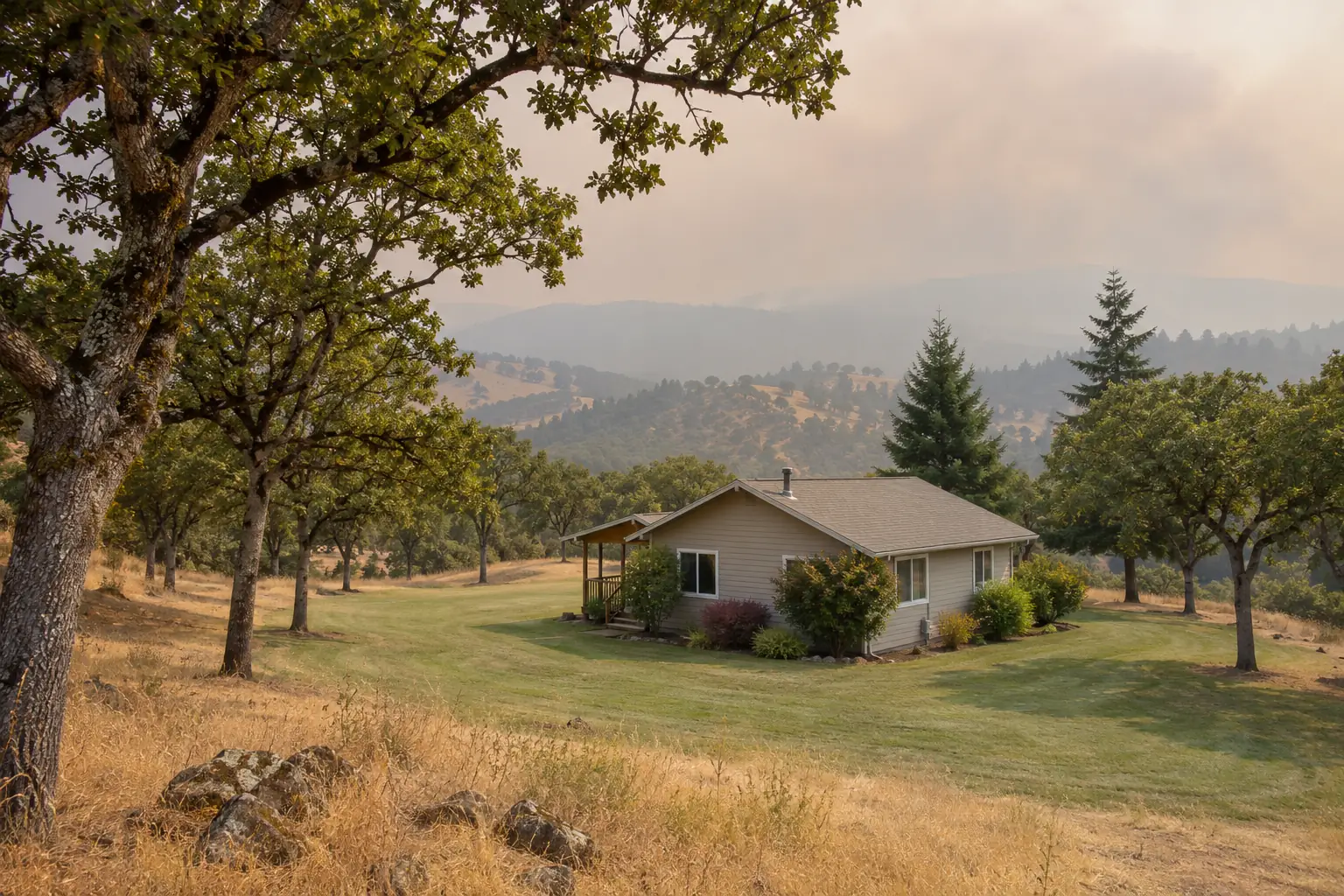
Fire safety still applies around the house. The Oregon State Fire Marshal's defensible space page advises pruning trees up six feet from the ground, spacing tree crowns at least ten feet apart, and removing brush under trees in the zone 5 to 30 feet from a home. For an oak, that usually means limbing up and clearing brush underneath rather than removing the tree. The fire season tree work guide covers the zones in detail.
Oaks on river lots and slopes
An oak within 75 feet of the top of the Rogue River bank inside Gold Hill falls under the city's riparian rules. Section 17.49.040 of Title 17 says vegetation and tree cover will be retained in that band, with limited exceptions. Outside city limits, the Jackson Soil and Water Conservation District says the county uses the same 75-foot distance on the Rogue. Talk to the city or county before removing an oak there. The Gold Hill tree rules guide has the details.
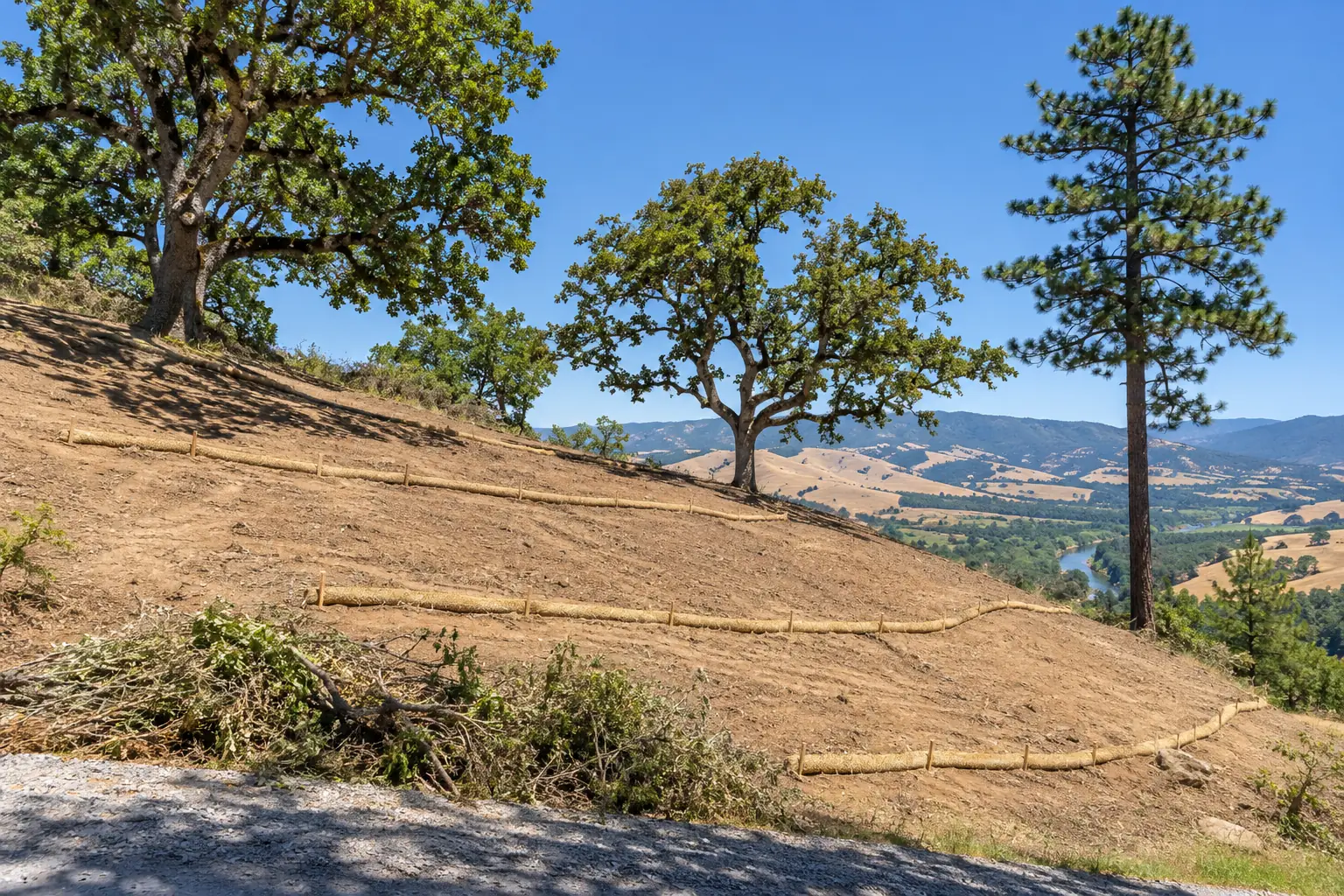
Oaks also hold soil on slopes. ODF notes white oak has a deep taproot and well-developed lateral roots that make it very wind firm. If an oak on a steep bank must come down, ask whether the stump can stay. ODF also notes white oak can sprout from cut stumps and root collars, so expect new shoots. The hillside tree removal guide covers slope work.
What to ask the tree company about an oak
When the company looks at your oak, these questions help you decide:
- Is the oak healthy apart from the problem I called about?
- Would pruning, limb removal or mistletoe pruning fix it?
- Are there conifers crowding it that should go first?
- If it must come down, can the stump stay?
- Will the wood be left in rounds or hauled?
- What is your CCB number?
Check the number on the Oregon CCB license search. Oak is dense, heavy wood, and cost guides note hardwoods can cost more to remove. Price ranges are in the tree removal cost guide.
Frequently asked questions
Is it illegal to cut down an oak tree in Gold Hill?
The city code reviewed for this site does not have a general oak protection rule for private lots. Trees within 75 feet of the Rogue River bank are under a retention rule. Confirm with City Hall at (541) 855-1525 before cutting.
Does mistletoe kill oak trees?
OSU Extension says mistletoe's effects on host trees are typically small, though heavy infections can cause dieback and drought stress. The bigger risk is heavily loaded branches breaking in storms.
Should I remove the firs growing around my oak?
Removing crowding firs often helps the oak. ODF says Oregon white oak will die after being overtopped by Douglas-fir, and the Oregon Conservation Strategy recommends removing conifers that compete with larger oaks. Ask the tree company to assess both.
Will an oak stump grow back?
An oak stump can send up new shoots. ODF notes Oregon white oak sprouts from cut stumps and root collars. Grind the stump if you do not want shoots, or keep one sprout as a new tree.
Are oaks a fire hazard near my house?
Healthy oaks are not usually the main fire risk. OSU Extension notes white oak's corky bark resists fire and open oak stands are less prone to crown fire. Prune low limbs and clear brush underneath to meet defensible space guidance.