
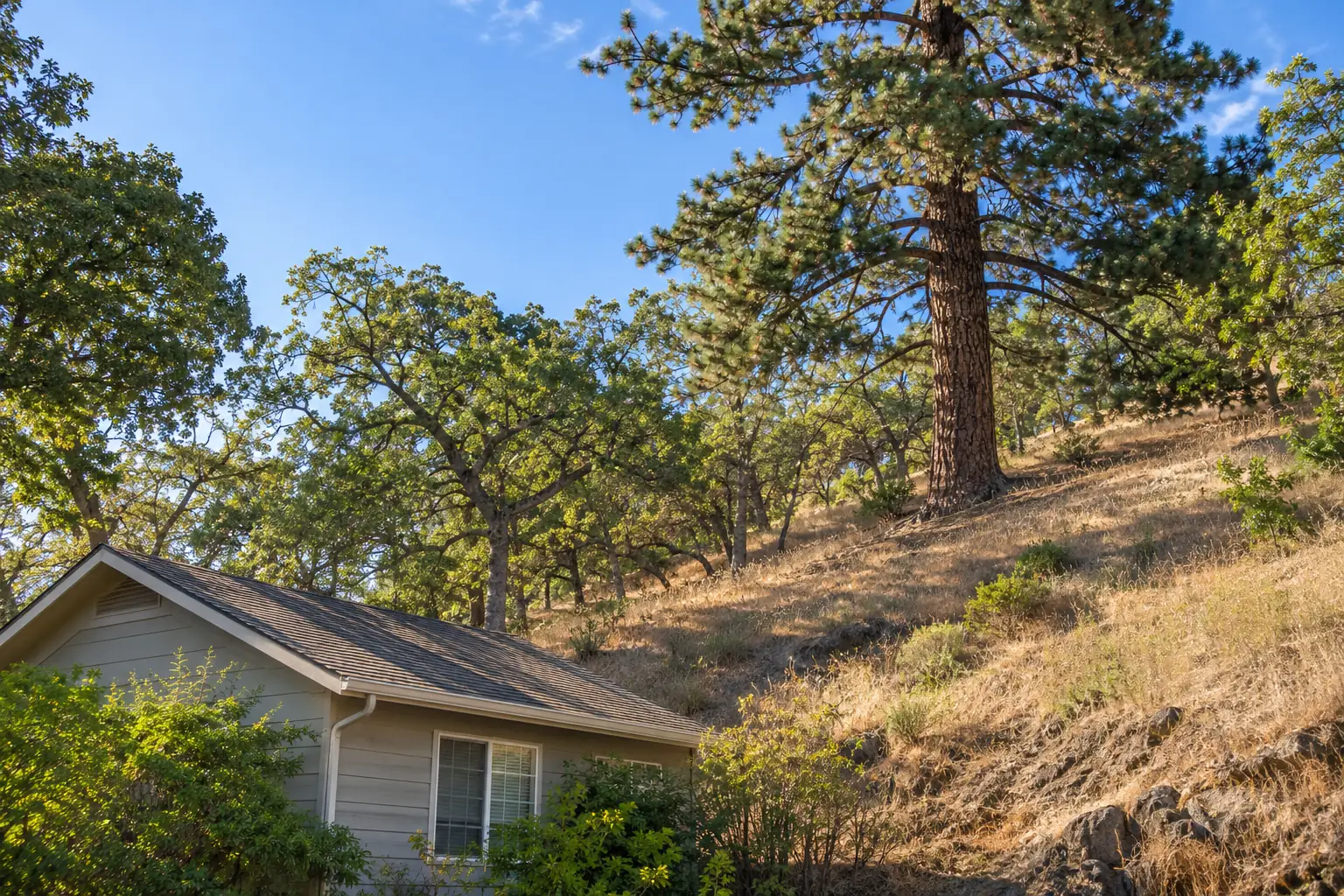
Lot clearing takes out the trees, brush, stumps and debris that stand where a house, driveway, pasture or fuelbreak needs to go. For a hillside or rural parcel near Gold Hill, call (541) 855-3080 for a free tree service referral. That referral is handed to just one independent tree company with an Oregon CCB license. Get it to pace the parcel with you and to commit its price to paper.
Tree Removal Gold Hill is a referral service, not a clearing contractor. It sends your request on and does no cutting, grading or hauling. The company you hire plans and does the work, and you choose whether to go ahead. This page covers what clearing usually includes, the river and slope rules of the city and Jackson County, the county's fuelbreak standard for new homes, ODF fire season limits and timber notices, locating buried lines, and what pushes the cost up on steep ground. The home page explains how the free call works.
What land clearing usually includes
A clearing job is a set of separate tasks, and the estimate should list each one. Most jobs around Gold Hill mix several of these:
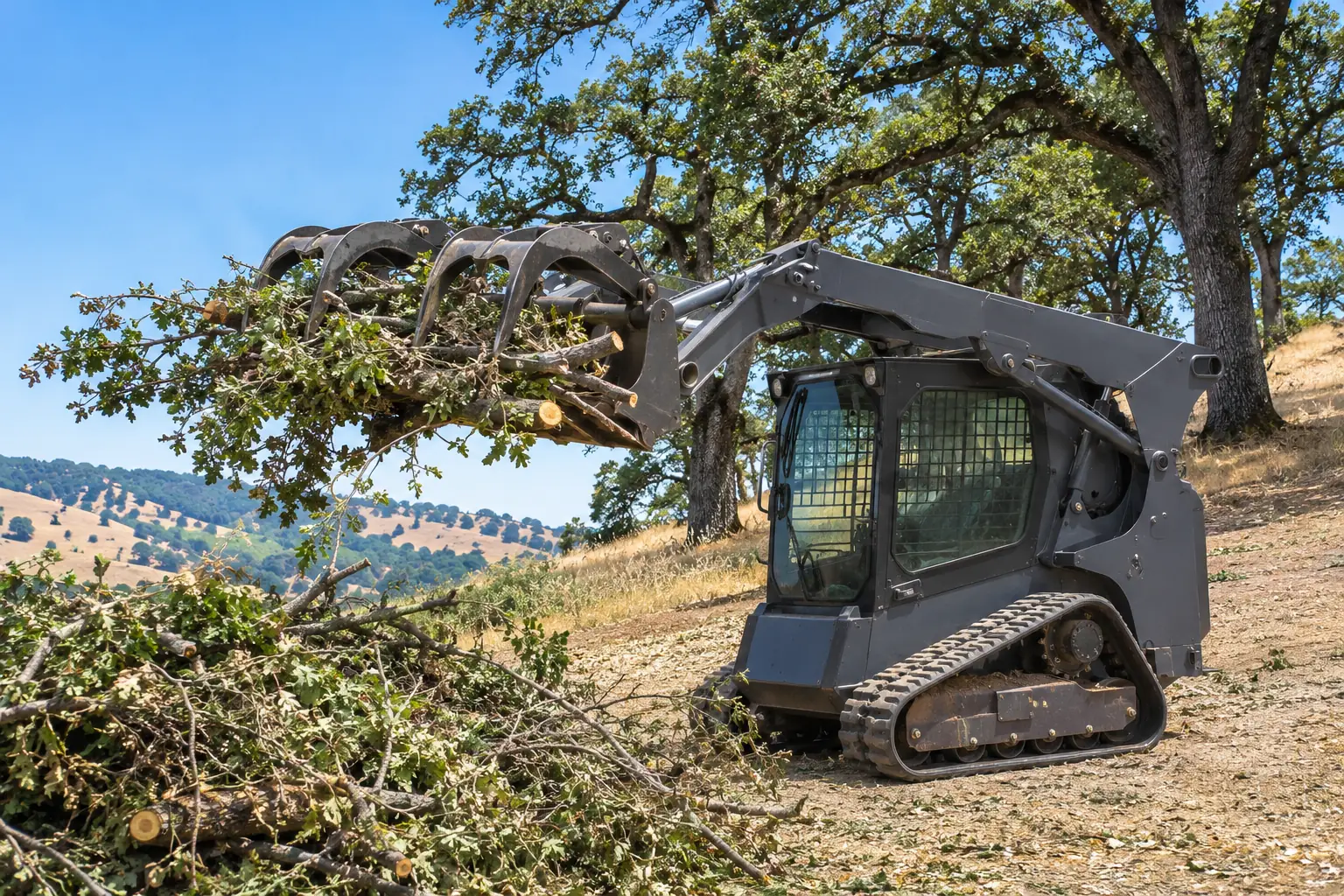
- Felling trees inside the area to be cleared, either whole or in sections near buildings.
- Brush cutting of manzanita, poison oak, blackberry and young trees, by hand or with a mower or mulching head.
- Grubbing, which pulls roots and stumps out of the soil where a foundation, septic field or road will go. Elsewhere, stumps can be ground instead. The stump grinding page explains the difference.
- Handling the wood. Logs can be sold, cut into firewood rounds, chipped or hauled. Selling logs can trigger a state notice, covered below.
- Selective clearing, where chosen trees stay. Many owners keep big oaks and thin crowded young conifers around them.
- Cover afterward. Seed, straw or spread chips protect bare soil before the rains.
Tie flagging on every tree you want kept before the company prices the job.
Clearing near the Rogue River and creeks
Both Gold Hill and Jackson County keep trees and plants in place along the Rogue River, so clearing stops well short of the bank. Inside the city, Section 17.49.040 of Title 17 keeps vegetation and tree cover within 75 feet of the top of the Rogue's bank, and Section 17.49.020 bars development, grading included, inside that same distance.
Outside city limits, Section 8.6.4 of the county's Land Development Ordinance, Chapter 8 sets two distances:
| Water | Plants and trees kept within |
|---|---|
| Rogue River | 75 feet of the top of the bank |
| Class 1 or 2 streams and other fish-bearing waters, including fish-bearing lakes, ponds and intermittent streams | 50 feet of the top of the bank |
Man-made farm ponds are excluded. The county measures the top of bank at "bankfull stage," where water starts spilling onto the upland. Its exceptions are short: non-native plants replaced with natives under a landscape plan the Oregon Department of Fish and Wildlife approves, clearing for water-related uses under the same kind of plan, and forestry granted a permit under the Forest Practices Act. Section 8.6.4 also says no understory or tree canopy in the setback may be removed to meet fuelbreak rules.
Mark the setback line on the ground before any machine arrives. The Gold Hill tree rules guide lists who to call, and Jackson County Planning answers questions about rural land.
Steep ground and erosion control
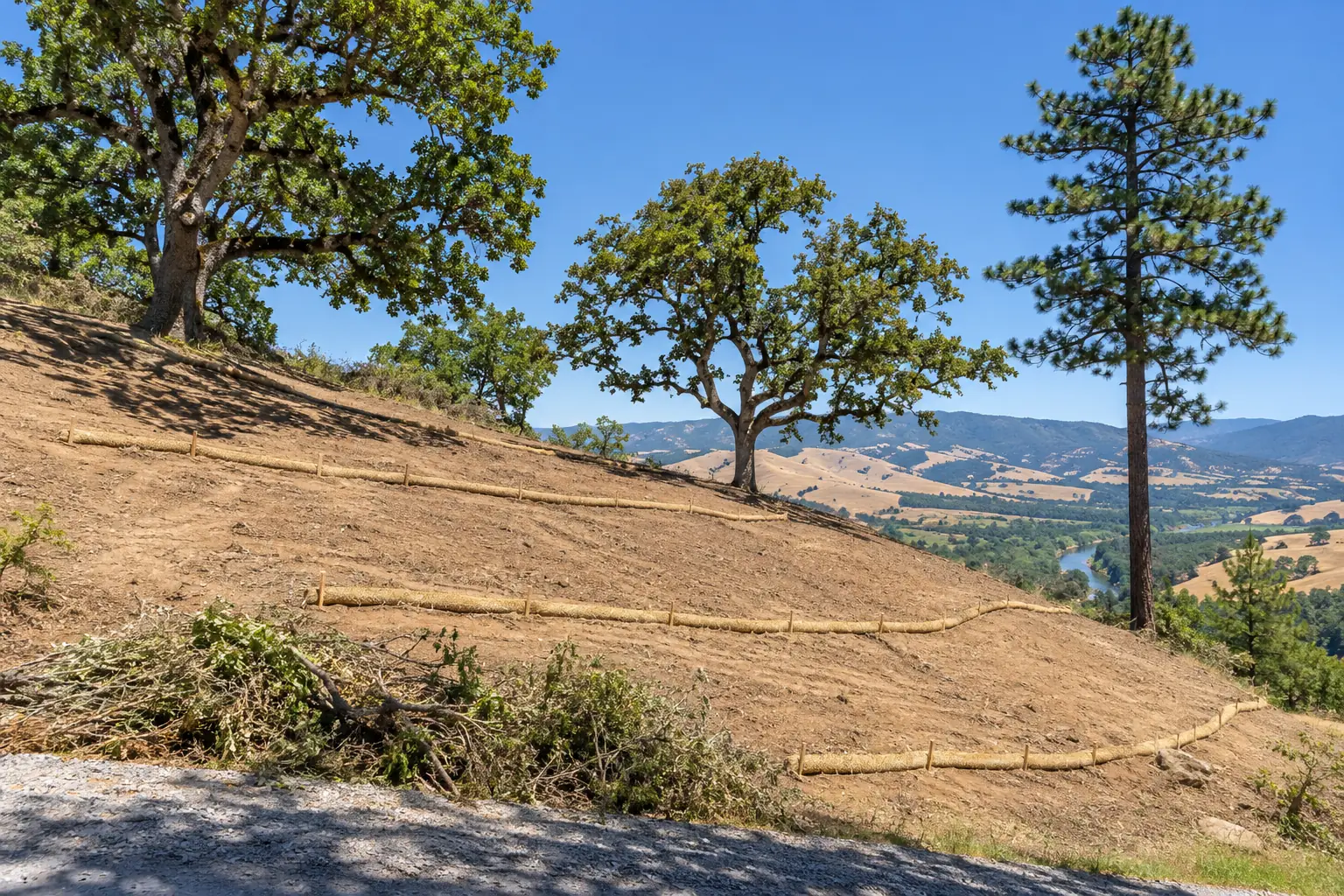
Clearing a slope leaves bare soil right where winter rain runs off, and both the city and the county have rules for it. Inside Gold Hill, Section 17.50.020 of Title 17 requires an erosion prevention and sediment control plan before the city approves a building or grading permit that disturbs 2,500 square feet or more, disturbs land or native plants within 50 feet of the top of bank of a stream, river, wetland or storm drain inlet, or disturbs 500 square feet or more on a slope of ten percent or steeper.
Section 17.50.050 then sets the working rules for those plans. During the rainy season, November through April, soil may not sit exposed for more than seven days in a row. Any disturbed ground left unworked for 21 days or longer during construction has to be mulched and seeded. The section also caps soil loss from the site at one ton per acre per year.
Jackson County's Chapter 9, Section 9.3.1, treats natural slopes over 20 percent as steep. Building on steep ground can call for a site assessment by an Oregon-registered engineer or engineering geologist before the county approves it. The hillside tree removal guide covers how slope work is done.
Fuelbreaks for a new home on rural land
If you are clearing for a new house in a mapped wildfire hazard area outside the city, the county already sets how far to clear. Section 8.7.1 of the Land Development Ordinance requires a fuelbreak of at least 100 feet around new structures shown on its Hazardous Wildfire Area Map, checked in a fire safety inspection before building permits are issued.
| Zone | Distance | What the county requires |
|---|---|---|
| Primary fuelbreak | First 50 feet | Grass under 6 inches; tree trunks more than 15 feet apart; dead branches and branches under 10 feet off the ground pruned away; leafy tree branches at least 10 feet from the roof and evergreen branches at least 25 feet; firewood and slash piles 30 feet or more from structures |
| Secondary fuelbreak | Next 50 feet | Trunks more than 15 feet apart, lower and dead branches pruned, small trees and brush under larger trees removed, ground cover under 12 inches |
| Extra secondary | 50 more feet below and to the sides | Added when the natural slope within 100 feet of the house is over 20 percent |
Driveways and private roads need a fuelbreak at least 22 feet wide, counting the driving surface. Ornamental and fruit trees are left out of the spacing rule if they stay green and free of dead wood. Where the fuelbreak overlaps a riparian setback, the river rule wins. The fire season tree work guide covers the defensible space zones that apply to existing homes.
Fire season limits on saws and machines
From the day ODF declares fire season, power saws and engine-driven machines on ODF-protected land run only during set hours. The 2026 regulated closure proclamation for the Southwest Oregon District took effect May 15, 2026. It allowed saws all day at low danger, before 1 p.m. and after 8 p.m. at moderate danger, before 10 a.m. and after 8 p.m. at high danger, and not at all at extreme danger.
Mulchers, skid steers and grinders that are not named in the proclamation fall under its catch-all for spark-emitting engines, with the same hours. They must run in an area cleared of flammable plants for 50 feet all around, with a charged hose or a 2.5-pound extinguisher at hand. Backyard debris burning is banned for the whole season.
Commercial forest work follows a second system. ODF's Industrial Fire Precaution Levels for land west of the Cascades start at Level I, which adds a firewatch. Level II limits power saws (except at loading sites), cable yarding and metal cutting to 8 p.m. through 1 p.m. Level IV shuts all operations down. Ask the company which set of rules applies to your job, and plan big clearing for fall, winter or early spring.
When ODF needs to hear about the job
Clearing forestland for a non-forest use is one of the operations that must be reported to the State Forester. The list in OAR 629-605-0140 includes harvesting trees, building roads, clearing forestland for conversion to any non-forest use, disposing of slash, pre-commercial thinning, and cutting firewood that will be sold or bartered.
ODF's notification page says notices go in at least 15 days before work starts, through its online FERNS system. A forest landowner, timber owner or operator can file. The same system handles permits to use fire or power-driven machinery, and timber harvest notices also reach the Department of Revenue.
ODF's FAQ page says the Forest Practices Act does not forbid changing forestland to another use. The owner has to document that county rules and permits are met, and the change of use must be finished within 24 months after harvest ends. Ask ODF's local office if you are unsure whether your project counts.
Call 811 before grubbing or grinding
Pulling roots and grinding stumps reaches below ground, so buried lines need to be marked first. In an April 2026 release, the Oregon Public Utility Commission and the Oregon Utility Notification Center told homeowners and contractors to submit a locate request at least two business days before digging, at Oregon811.com or by calling 811. Utility crews then mark the lines they can locate at no cost to you.
Rural lots often have private lines, such as a well pump feed, irrigation pipe or septic line. Sketch those for the company before work begins.
What drives the cost of clearing a hillside lot
Clearing is priced by area, density and how hard the ground is to work. Lawn Love's land clearing cost guide, updated December 27, 2025, gives a typical total of $1,565 to $4,520, with $2,900 as the national average for lots of half an acre to 2 acres. Its per-acre figures:
| Land type | National cost per acre |
|---|---|
| Brush only | $330 to $630 |
| Lightly forested | $580 to $2,100 |
| Heavily forested | $3,300 to $5,600 |
The guide also lists hourly rates of $120 to $265 and says hillside lots with hard access cost more. Around Gold Hill, the price climbs with the pitch of the slope, a rough access road, short fire season hours, stumps that must be pulled, and chipping or hauling where burning is limited. The company's written estimate is what you pay, and the tree removal cost guide covers prices for single trees. Branches and piles left after clearing are covered on the brush and debris removal page, and shaping the trees you keep is covered on the tree trimming and pruning page.
Frequently asked questions
Can I clear my lot right up to the Rogue River?
No. Gold Hill and Jackson County both keep plants and trees within 75 feet of the top of the Rogue's bank, with only narrow exceptions. In the county, fish-bearing streams get 50 feet. Ask the city or county before clearing anywhere close.
Do I need to tell ODF before clearing land near Gold Hill?
You do if the work is clearing forestland for a non-forest use, harvesting timber, or selling firewood or logs. Those operations are filed through FERNS at least 15 days ahead. Ask ODF if you are not sure your project counts.
Can I burn the brush from clearing?
Not in fire season, when ODF bans backyard debris burning. Oregon DEQ rules also treat land clearing as demolition burning, which is barred in the Rogue Basin open burning control area without a DEQ letter permit. Chipping or hauling is usually the practical choice.
What is the best time of year to clear a lot?
Fall, after fire season ends, gives the longest working days without saw limits. Plan erosion cover before winter, since Gold Hill's rules for permitted projects keep soil from sitting bare for more than seven days in a row from November through April.